About us
Palm Beach Mold Removal handles mold inspection, testing, removal and remediation for homeowners across Palm Beach County, Florida.
Some jobs are one bathroom. Some are a whole house. A lot of them start with a call that opens "it's probably nothing, but there's a smell."
Why mold behaves differently in Palm Beach County
Indoor humidity above about 60 percent will sustain mold growth. In Palm Beach County that's most of the year, not a bad couple of weeks in August.
That changes what a mold problem looks like. Somewhere drier, you find the leak, dry the place out, and that's usually the end of it. Here the moisture keeps coming back, so anything you didn't treat properly gets a second run at it.
Most of what we see started small. A washing machine hose weeping behind the drum for two weeks. An AC condensate line backing up inside a wall. A roof that let water in during one storm and looked dry again by the next.
Someone dries the surface. Nobody opens the wall. Six months later there's a stain coming back through the paint.
What we do
- Mold inspection. The scoping survey: finding where the water got in, including the places mold sits out of sight: behind baseboards, under flooring, in wall cavities, around air handlers.
- Mold testing. Air and surface sampling, through an independent licensed assessor, not us. Useful when you suspect a problem you can't see, or when a sale, a landlord or an insurer wants it documented. Keeping it independent is also the law in Florida: the firm that remediates can't sign off its own testing.
- Mold removal. Taking the contaminated material out under containment. Not painting over it.
- Mold remediation. The bigger job. Removal, plus fixing whatever let the water in, because mold pulled off a wall that's still wet will be back.
- Drying and moisture control. Getting the structure down to a moisture level that won't support regrowth, and telling you what keeps it there.
How a job actually runs
Proper remediation is a sequence. It takes days, and most of them are quiet.
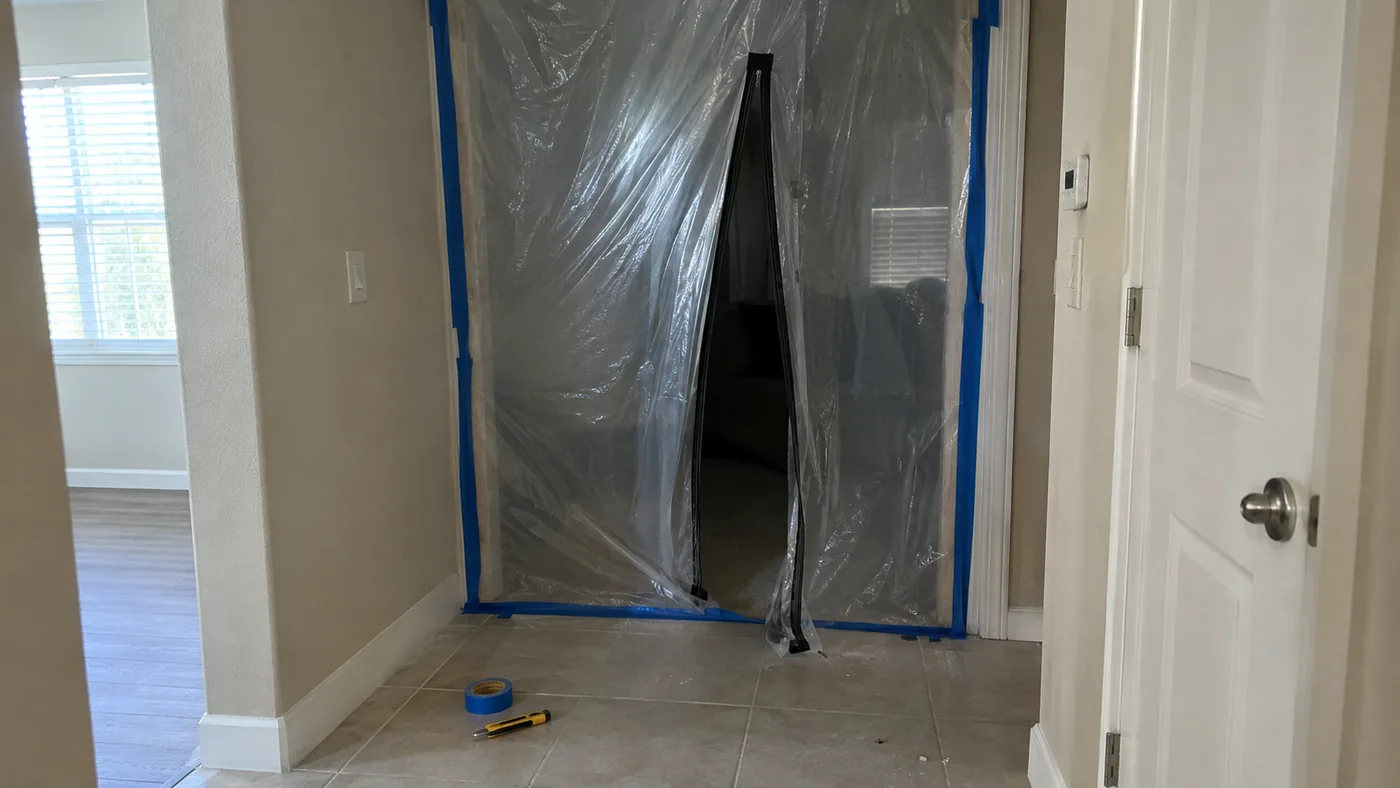
- Containment. Plastic sheeting seals the work area so the spores we disturb don't end up in the rest of the house.
- Negative air. An air scrubber pulls air out of the sealed zone through a HEPA filter. Anything that leaks, leaks inward.
- Removal. Drywall, insulation and carpet usually can't be saved and come out. Hard surfaces get cleaned and HEPA vacuumed.
- Drying. Dehumidifiers and air movers, running until the moisture readings come down. This is the part people underestimate.
- Clearance. An independent licensed assessor checks the area before the sheeting comes down. In Florida the firm that did the removal can't sign off its own clearance, so this stays with someone separate.
If a quote doesn't mention containment anywhere, ask why before the work starts. There are photos of what containment actually looks like in our job photos, and a short walkthrough of the process on our YouTube channel.
What we won't do
We won't sell you testing you don't need. If the mold is right there in front of you, paying to confirm it exists doesn't change the plan. Testing earns its keep when the problem is hidden, disputed, or has to go on paper for somebody else.
Quoting a remediation without knowing where the water came from is guesswork, so we don't do it. The number would be wrong, and it would be wrong in the cheap direction, which is the worst kind of wrong for you.
And if you call about a bit of black on bathroom grout, there's a decent chance we'll tell you it's mildew, point you at the cleaning aisle, and not charge you anything. That happens fairly often.
Where we work
Palm Beach County, coast to the western communities. West Palm Beach, Boca Raton, Delray Beach, Boynton Beach, Jupiter, Palm Beach Gardens, Wellington, Lake Worth Beach, Royal Palm Beach, Riviera Beach, and the areas around them.
We do travel outside the county for the right job. Worth asking.
Elsewhere
There's a service area map and a stage-by-stage breakdown on our Google Sites page. Before and after shots and the occasional seasonal reminder go on Facebook.
Insurance, spread rates, mold versus mildew: the blog goes deeper on all of it than this page does.
Call (561) 529-5430