
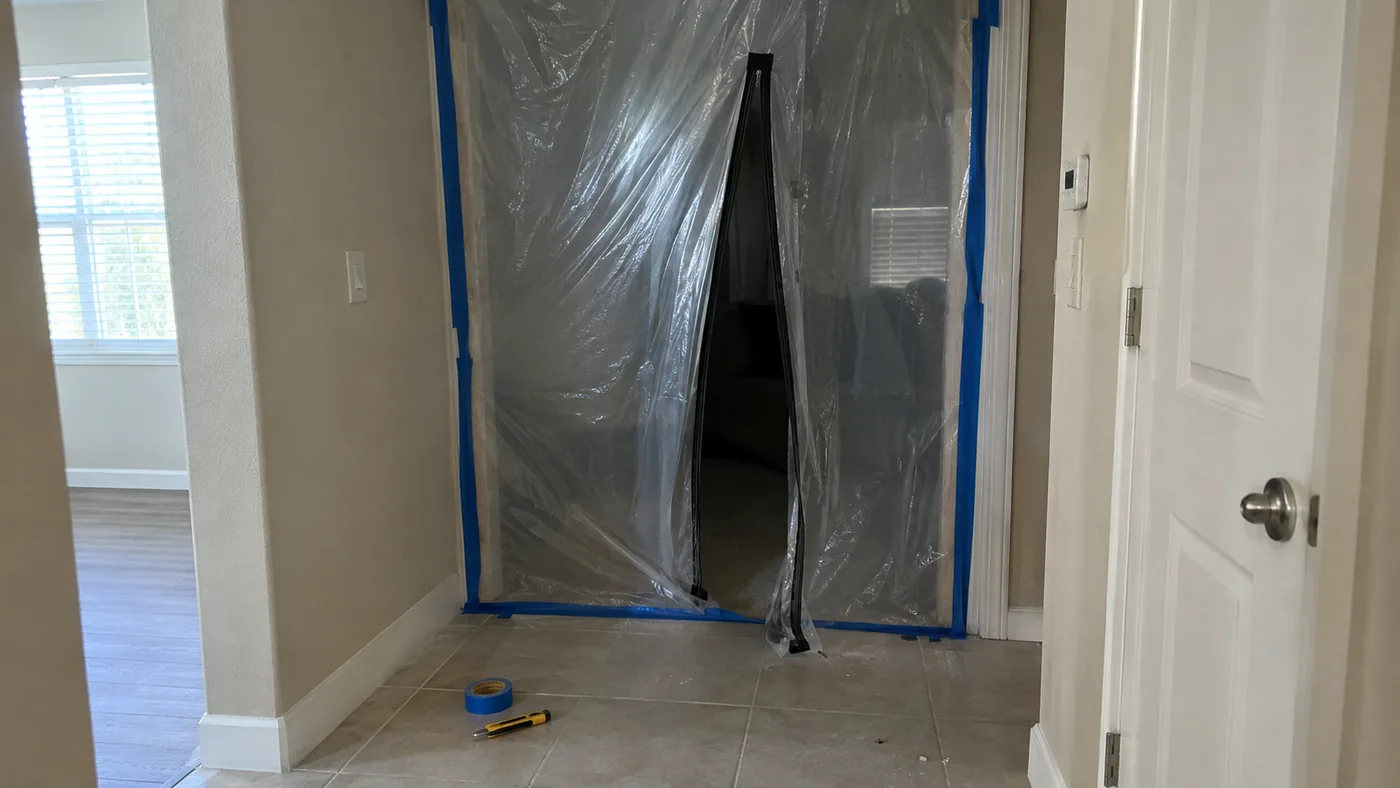
Containment · Barrier
Sealing the work area
Poly sheeting and a zipper door separate the affected area from the rest of the building. Vents inside the zone are sealed so the HVAC system cannot pull spores into rooms that were never affected.
Most mold is urgent. Some of it is not.
Contain. Remove. Verify.
A genuine mold emergency is one where waiting makes the problem materially worse or puts somebody at risk, and that is a narrower set of situations than the word suggests. Knowing which one you have changes what should happen tonight versus next week. Call and describe it. If it can wait until Monday we will tell you that, and we will tell you what to do in the meantime so it does not get worse.
Need someone now?
(561) 529-5430Tell us what happened and who is in the building. We will triage it on the phone, at no charge.
Call (561) 529-5430No obligation·No pressure
Triage
Four situations where delay changes the outcome rather than just the schedule. If none of these apply, you almost certainly have an urgent job rather than an emergency one, and the distinction is worth several hundred dollars.
An active leak, a storm breach or a backed-up drain means the affected area is still expanding. Every hour adds material that will need drying or removing. This is the one case where the clock is genuinely running, because the window before colonization begins is measured in a day or two, not weeks.
Sewage backup, rising groundwater or storm surge brings bacteria as well as moisture, and porous material that has absorbed it does not get dried and kept. The health question here is immediate rather than cumulative, which is what separates it from ordinary growth behind a shower wall.
An occupant with asthma, a compromised immune system, an infant or an elderly relative changes the calculation, particularly where growth is in a bedroom or served by the same ductwork. The practical answer is often to isolate the room and relocate the person while work is scheduled rather than to rush the remediation itself.
Restaurants, clinics, rentals and offices face an inspection or liability problem the moment visible growth appears in a public area. The driver here is commercial rather than structural, and it usually means contained work carried out overnight so the space is usable the following day.
What to expect
The first visit is not the remediation. It is the part that stops the situation getting worse and establishes what the actual job is, and in a genuine emergency those are two different days.
Finding the moisture source comes first, because remediating without it guarantees a return visit. Thermal imaging and moisture meters locate where water is entering and how far it has traveled behind finishes, which is usually further than the visible staining suggests.
Containment goes up second, before anything is cut, moved or cleaned. Then affected materials are documented with photographs and readings, which is also the record an insurer will want. Our post on what Florida policies cover explains why that documentation is worth more than most people expect.
On response times, the honest position is that they depend on current demand. After a named storm, every company in Palm Beach County is dealing with the same spike at the same time, and anyone promising a fixed arrival window during that period is making it up. What we will do is tell you on the phone when we can realistically be there, and what to do in the meantime.
The part that matters most
Mold sitting undisturbed on a wall releases relatively little into the air. Mold being scrubbed, cut out or torn down releases a great deal. Almost everything that makes remediation different from cleaning exists to manage that moment.
Containment · Barrier
Poly sheeting and a zipper door separate the affected area from the rest of the building. Vents inside the zone are sealed so the HVAC system cannot pull spores into rooms that were never affected.
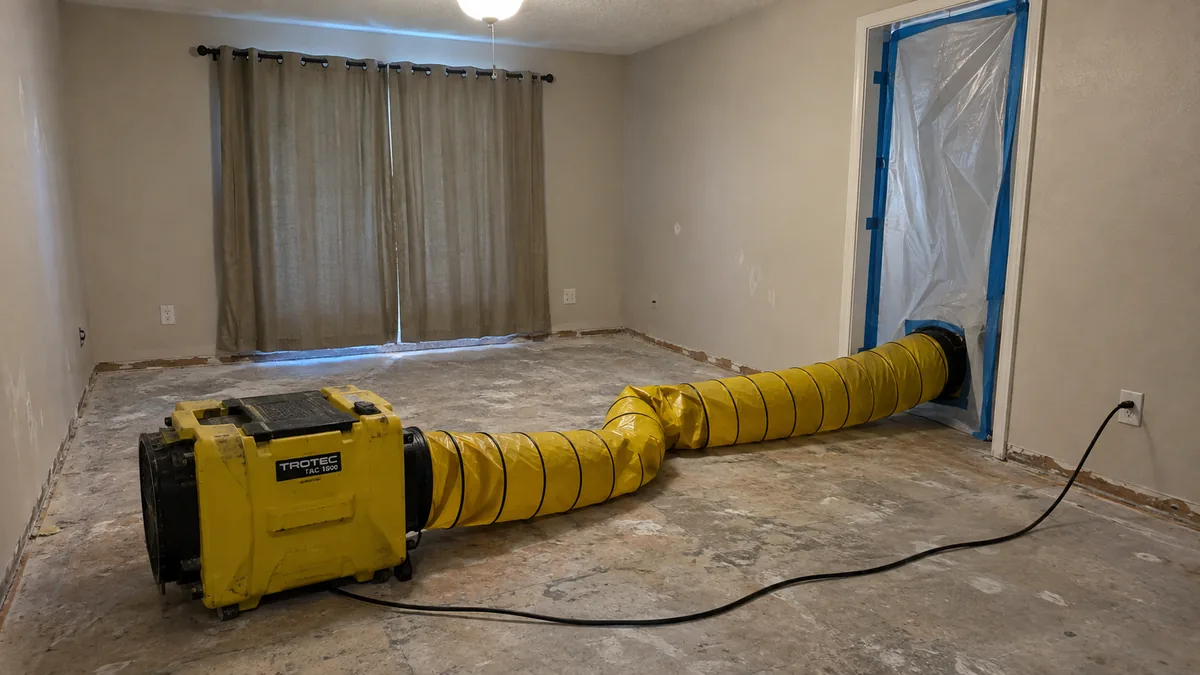
Negative air · HEPA
A HEPA-filtered machine exhausts air out of the contained zone, so the pressure inside sits slightly below the rest of the building. Any leak in the barrier then pulls clean air in rather than pushing contaminated air out.
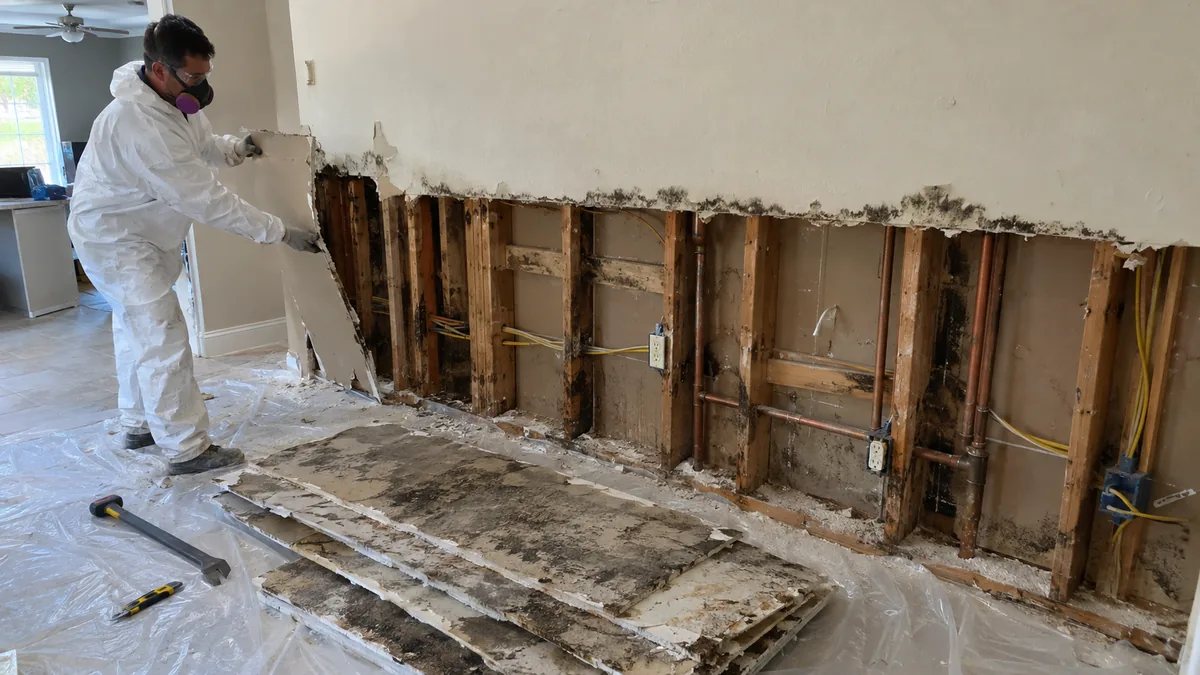
Removal · Porous material
Drywall, insulation and carpet pad are porous, so growth goes into the material rather than sitting on it. Surface treatment removes the staining and leaves the colony, which is why affected sections are cut back past the visible edge.
Not sure whether yours is an emergency?
Describe it on the phone. We would rather talk you down than send a truck you did not need.
The gap between finding mold and having it dealt with is where most of the avoidable damage happens, almost always with good intentions.
What does help: close the door to the affected room, turn off any HVAC serving it, move people with asthma or respiratory conditions out of that part of the building, and stop the water if you can find it. None of that is dramatic, and all of it holds the situation steady until someone arrives.
Common questions
Question not answered here? Ask it on the phone. There is no charge for a conversation, and no obligation afterwards.
Call (561) 529-5430Mold is an emergency in four situations: water is still arriving, the water was contaminated, someone in the building is medically vulnerable, or a business cannot operate until it is dealt with. Outside those, mold is urgent rather than an emergency, meaning it should be booked promptly but does not need an out-of-hours call-out. Growth that has been quietly developing behind a shower for months does not become critical in the next forty-eight hours.
How quickly we can reach a mold emergency depends on current demand, and we will give you a realistic answer on the phone rather than a standard promise. Call-outs including weekends and holidays are available. During storm season, demand across Palm Beach County spikes for every company at once, and arrival windows stretch accordingly. Anyone guaranteeing a fixed response time in that period is not being straight with you.
You should leave your home over mold only in limited circumstances, chiefly where the growth is extensive, the water was contaminated, or an occupant has asthma, a compromised immune system or another condition that makes exposure a genuine risk. For most findings, closing off the affected room and keeping HVAC off in that zone is enough until the work is done. If anyone in the household is unwell, that is a question for their doctor rather than for a remediation company.
You can clean mold yourself with bleach only on hard non-porous surfaces such as tile, glass or sealed countertops, and only over a small area. On porous materials like drywall, wood or carpet, bleach removes the visible staining while the growth inside the material continues, so the wall looks resolved and is not. If the affected area is larger than a bathroom tile panel, or the material is porous, cleaning is not the right tool.
Emergency mold removal typically costs more than scheduled work, because out-of-hours call-outs, immediate containment and overnight equipment all carry a premium. The more useful comparison is against what delay costs, since affected area tends to grow and a contained bedroom wall is a far cheaper job than the same wall plus the ductwork it seeded. We will not quote a remediation before knowing where the water came from, because that number would be wrong in the cheap direction.
Mold emergency now? Call and we will triage it.
Free, no-obligation advice on the phone.