Palm Beach County mold risk statistics
Mold risk, in numbers.
2026 edition, updated November 17, 2026
Palm Beach County is a high-moisture place to own a home. Outdoor humidity at West Palm Beach averages 82 percent on a typical morning, about 62 inches of rain falls in a normal year, and roughly 77 percent of the county's homes were built before 2000. Yet in the latest federal housing survey, homes in the Miami-Fort Lauderdale-West Palm Beach area reported mold slightly less often than the national average. These are the numbers we keep reaching for on calls, each linked to the agency that published it.
Reported mold in the past year (2023)
Average morning / afternoon humidity
Normal yearly rainfall, 1991 to 2020
Seeing or smelling mold?
(561) 529-5430Tell us where it is, how big the patch looks and whether anything got wet recently. That narrows down the cause quickly.
Call (561) 529-5430No obligation·No pressure
At a glance
Key Palm Beach County mold risk statistics
Eight figures that explain why mold is a year-round risk here, not a hurricane-season one.
2.2%
Homes in the Miami-Fort Lauderdale-West Palm Beach area that reported mold in the past 12 months, in 2023.
2.9%
The national rate in the same survey: 3.9 million of 133.2 million occupied homes.
82%
Average morning relative humidity at West Palm Beach across the year. Afternoons average 61%.
61.8 in
Normal yearly rainfall at Palm Beach International Airport. About half falls from June to September.
77%
Share of Palm Beach County's 708,303 housing units built before 2000. About 61% predate 1990.
24 to 48 hrs
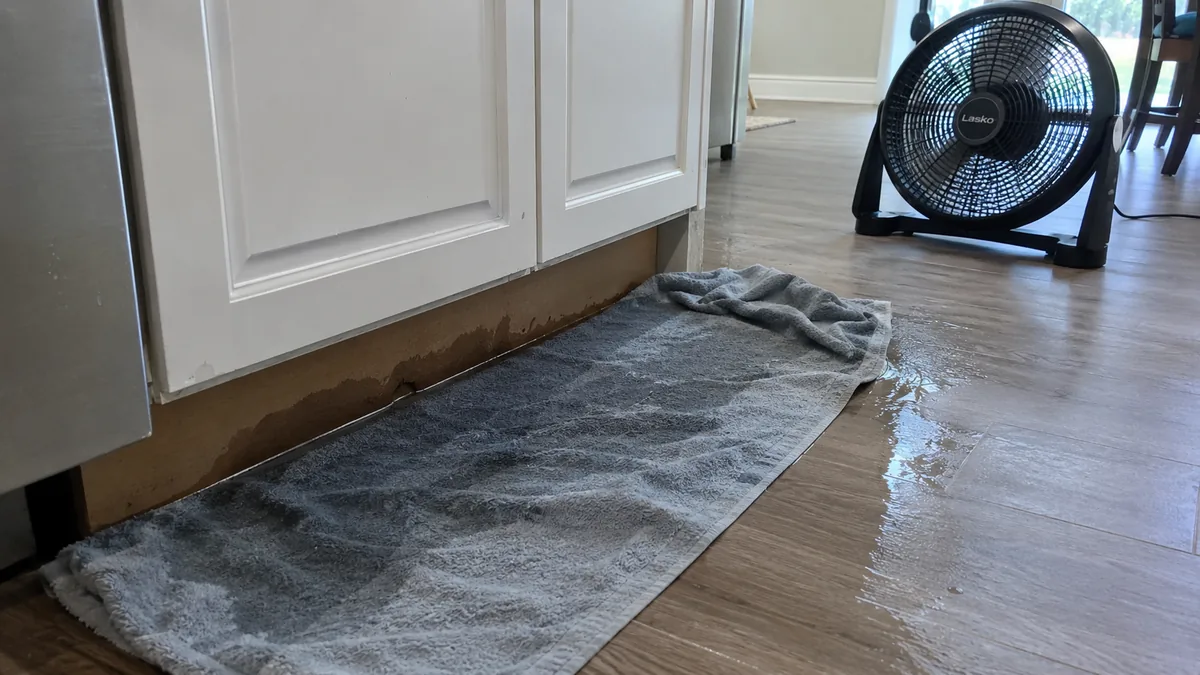
How fast the CDC says a flooded home needs drying. Past that, assume mold is growing.
21%
Share of current US asthma cases attributable to dampness and mold in homes, about 4.6 million cases.
Prevalence
How common is mold in Palm Beach County homes?
About 1 in 46 homes in the Miami-Fort Lauderdale-West Palm Beach metro area reported mold in the past year, according to the 2023 American Housing Survey. That is slightly below the national rate.
| Measure | Miami-Fort Lauderdale-West Palm Beach | United States |
|---|---|---|
| Occupied homes | 2,334,000 | 133,231,000 |
| Homes with mold | 50,200 (2.2%) | 3,908,000 (2.9%) |
| Homes with a leak from inside (pipes, fixtures, appliances) | 90,000 (3.9%) | 11,215,000 (8.4%) |
| Homes with a leak from outside (roof, walls, windows) | 112,700 (4.8%) | 11,757,000 (8.8%) |
The survey is run by the Census Bureau for HUD, and the figures above come straight from its Table Creator. It only counts mold that covers at least the area of a letter-size sheet of paper, as reported by the household. Nobody inspects. Small patches behind furniture, inside wall cavities or in an air handler don't make it into the count.
So read the lower local rate with care. The margin of error is plus or minus 14,200 homes, which puts the true metro rate somewhere between about 1.5 and 2.8 percent, close to the national figure at the top of that range. The fair summary is "no higher than the national rate", not "much lower". South Florida homes also reported far fewer leaks than the national average, from inside and outside alike. Our read, and it is only a read: air conditioning runs most of the year here, which keeps indoor humidity in check when the system is sized and working properly.
The flip side is that these figures describe 2023, an ordinary year. They say nothing about what happens after a major water event, such as the November 2026 flooding.
Humidity
How humid is Palm Beach County?
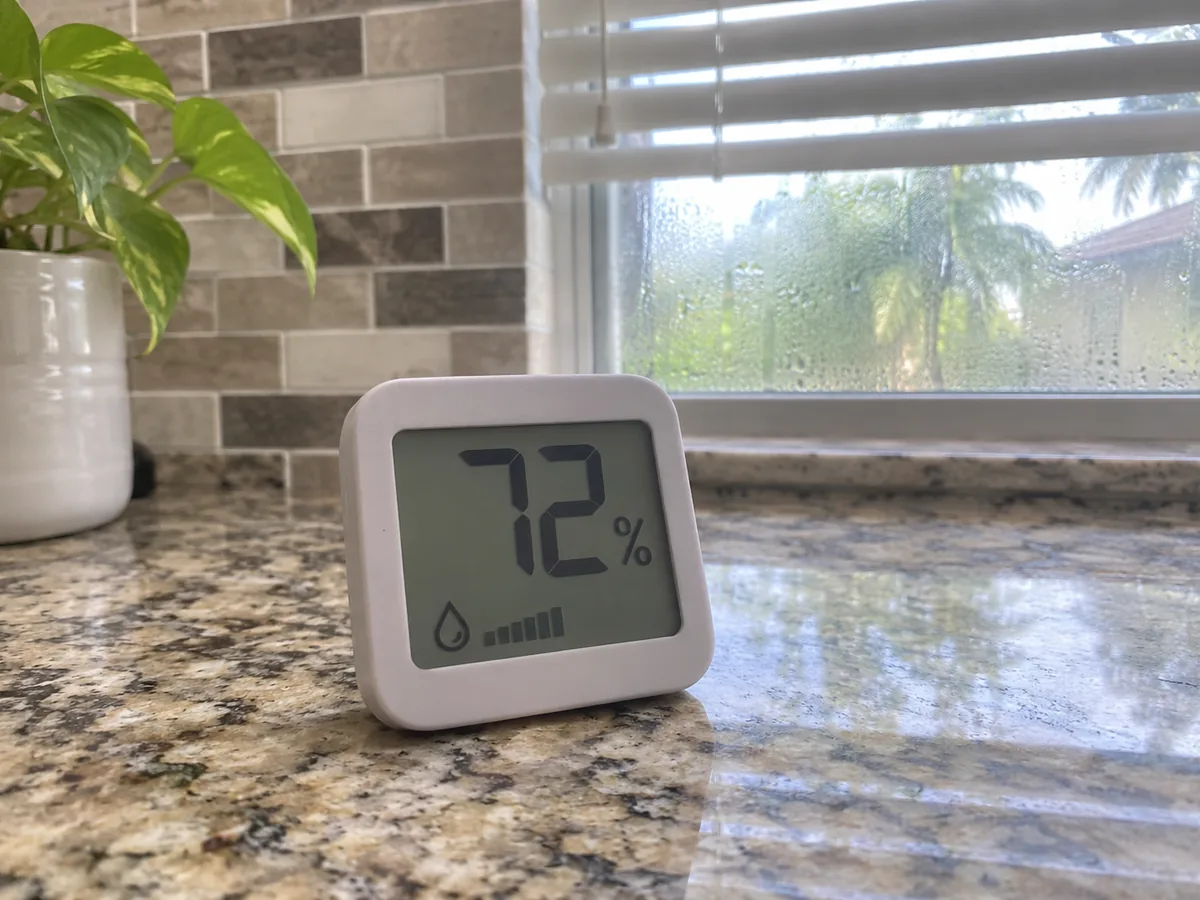
Palm Beach County is humid enough that outdoor air at West Palm Beach averages 82 percent relative humidity in the morning and 61 percent in the afternoon, across the whole year. Those averages come from NCEI records published by the Florida Climate Center, covering 71 years at the station.
The afternoon number is the one to remember. It's the driest part of the day, and it still sits above the EPA's 60 percent ceiling for indoor air. Opening the windows to "air the house out" brings in air that is already too wet.
So the indoor number depends on your air conditioning and ventilation, not the weather. Our page on preventing mold from coming back explains why an oversized AC unit is the usual culprit.
| Month | Jan | Feb | Mar | Apr | May | Jun | Jul | Aug | Sep | Oct | Nov | Dec | Year |
|---|---|---|---|---|---|---|---|---|---|---|---|---|---|
| Morning | 84% | 84% | 81% | 78% | 79% | 83% | 83% | 84% | 86% | 83% | 83% | 83% | 82% |
| Afternoon | 59% | 57% | 55% | 55% | 59% | 65% | 64% | 64% | 66% | 62% | 60% | 60% | 61% |
Mornings never average below 78 percent in any month. And from June through December, even the afternoon average is at or above 60 percent, so a home with weak dehumidification spends seven months a year with no help from outside at all.
Rainfall
How much rain falls in Palm Beach County?
Palm Beach County gets about 62 inches of rain in a normal year. The 1991 to 2020 NOAA climate normals for Palm Beach International Airport add up to 61.8 inches, and the National Weather Service publishes the station's daily normals as well.
Half of it arrives in four months. June, July, August and September bring 30.8 inches between them, with August the wettest at 8.7 inches. February is the driest at 2.6.
| Jan | Feb | Mar | Apr | May | Jun | Jul | Aug | Sep | Oct | Nov | Dec | Year |
|---|---|---|---|---|---|---|---|---|---|---|---|---|
| 3.5 | 2.6 | 3.3 | 3.7 | 4.9 | 8.5 | 5.6 | 8.7 | 8.0 | 5.9 | 3.6 | 3.5 | 61.8 |
Averages hide the bursts that cause the damage. November's normal is 3.6 inches for the whole month. On November 2, 2026, West Palm Beach got more than twice that in a single day, which we cover in our November 2026 flooding post.
Housing
How old are homes in Palm Beach County?
Most homes in Palm Beach County are more than 25 years old. Of the county's 708,303 housing units in the Census Bureau's 2022 American Community Survey, 547,528 were built before 2000 (about 77 percent) and 432,254 before 1990 (about 61 percent). The 1980s alone account for more than a quarter of the stock.
| Year built | Housing units | Share |
|---|---|---|
| 2020 or later | 3,672 | 0.5% |
| 2010 to 2019 | 46,661 | 6.6% |
| 2000 to 2009 | 110,442 | 15.6% |
| 1990 to 1999 | 115,274 | 16.3% |
| 1980 to 1989 | 190,712 | 26.9% |
| 1970 to 1979 | 132,876 | 18.8% |
| 1960 to 1969 | 54,805 | 7.7% |
| 1950 to 1959 | 34,187 | 4.8% |
| 1940 to 1949 | 8,123 | 1.1% |
| 1939 or earlier | 11,551 | 1.6% |
Age doesn't cause mold by itself. What it does is add up the chances: more storms survived, more roof cycles, more years of supply lines and drain joints aging inside walls. A 1980s house with no visible damage may still be carrying a slow leak nobody has looked for.
Flood exposure
Flood insurance and repeat flooding in Palm Beach County
Palm Beach County's flood exposure shows up in the insurance records. Unincorporated Palm Beach County alone had 41,944 National Flood Insurance Program policies in force in February 2024, according to FEMA data in the county's 2024 Local Mitigation Strategy.
The same report counts repetitive-loss buildings: insured properties with repeated flood claims. The Town of Palm Beach has 253 of them, the most of any community in the county. Unincorporated Palm Beach County has 177, and Boynton Beach and Ocean Ridge have 40 each.
Federal disaster declarations are a recurring part of life here too. Palm Beach County was included in FEMA declarations for Hurricane Irma in 2017 and Hurricane Ian in 2022. The November 2026 flooding may add another; we track its status in that post.
Mold coverage is a separate question from flood coverage, and Florida homeowners policies often cap or exclude it. Our post on whether insurance covers mold in Florida walks through where the lines usually fall.
Health and regulation
Mold, health and Florida's rules
Dampness and mold in homes account for about 21 percent of current asthma cases in the US, roughly 4.6 million people, according to a Lawrence Berkeley National Laboratory and EPA study in Indoor Air. The study's confidence interval runs from 12 to 29 percent, so treat 21 percent as the central estimate rather than an exact count. Our guide to black mold and its health risks covers who is most affected.
Florida's health department takes a practical line on testing. The Florida Department of Health does not recommend mold testing to find out whether you have a problem or what species it is. If you can see it or smell it, deal with the moisture and get the mold removed.
Licensing is handled by a different agency. The Florida Department of Business and Professional Regulation licenses mold assessors and mold remediators under sections 468.84 to 468.8424 of the Florida Statutes. Ask any contractor for their license number before work starts.
Method
Sources and how we compiled these figures
Every figure on this page comes from a government agency or a peer-reviewed study. A few are our own arithmetic from published tables: the share of homes built before 2000 and 1990, the June to September share of yearly rain, and the mold and leak percentages, which divide the American Housing Survey's counts by its total of occupied homes. We update this page once a year.
- U.S. Census Bureau and HUD, 2023 American Housing Survey, Housing Quality table (Miami-Fort Lauderdale-West Palm Beach and national)
- Florida Climate Center, relative humidity normals (NCEI data)
- NOAA 1991 to 2020 normals for Palm Beach International Airport, via Climate-Zone and the National Weather Service
- U.S. Census Bureau, ACS 2022 5-year estimates, DP04, via Palm Beach County Planning
- Palm Beach County, 2024 Local Mitigation Strategy, Appendix H (FEMA/NFIP data, February 2024)
- EPA, mold house tour guidance
- CDC, Homeowner's and Renter's Guide to Mold Cleanup After Disasters
- Mendell et al., Public health and economic impact of dampness and mold, Indoor Air (2007)
- Florida Department of Health, Indoor Mold and Your Health
Using these figures? You're welcome to quote them. Please credit Palm Beach Mold Removal and link to this page: https://moldremovalpalmbeach.com/blog/palm-beach-county-mold-statistics
Common questions
Palm Beach County mold questions, answered
Question not answered here? Ask it on the phone. There is no charge for a conversation, and no obligation afterwards.
Call (561) 529-5430
How common is mold in Palm Beach County homes?
About 2.2 percent of homes in the Miami-Fort Lauderdale-West Palm Beach area reported mold in the past 12 months, according to the 2023 American Housing Survey. That is about 50,200 homes, slightly below the national rate of 2.9 percent. The survey only counts mold at least the size of a letter-size sheet of paper, as reported by the household, so smaller or hidden growth is missed.
How humid is Palm Beach County?
Palm Beach County averages 82 percent relative humidity in the morning and 61 percent in the afternoon at West Palm Beach, based on NCEI records published by the Florida Climate Center. Both figures are above the EPA's 60 percent limit for indoor air, which is why homes here rely on air conditioning and dehumidifiers to stay out of the range where mold grows.
How much rain does Palm Beach County get a year?
Palm Beach County gets about 62 inches of rain in a normal year, based on NOAA's 1991 to 2020 normals for Palm Beach International Airport, which total 61.8 inches. About half of it falls from June to September, and August is the wettest month at 8.7 inches.
How soon does mold grow after water damage?
Mold can start growing after water damage if wet materials are not dried within 24 to 48 hours, which is the window the CDC gives for drying a flooded home and its contents. If that window was missed, the CDC advises assuming mold is already growing. Porous materials that soaked up floodwater, such as drywall, carpet pad and insulation, usually need removing rather than drying.
Do I need mold testing after water damage in Florida?
You usually do not need mold testing after water damage in Florida, because the Florida Department of Health does not recommend testing to confirm a problem you can already see or smell. Testing earns its cost in narrower cases, such as checking hidden areas or confirming clearance after remediation. Our page on mold inspection and testing covers when it is worth paying for.
Dealing with damp or mold right now?
Free, no-obligation advice on the phone.